
The Thunder Dragon (Druk)
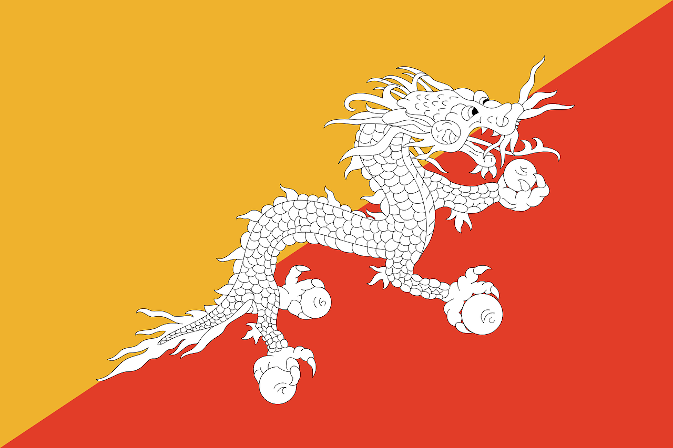
Bhutan is known as "Druk Yul" or "Land of the Thunder Dragon." The majestic Thunder Dragon appears on the national flag, holding jewels in its claws representing the nation's wealth and prosperity.
The dragon's snarling mouth symbolizes the fierce deities protecting Bhutan from external threats. The dragon is white, representing purity and the loyalty of the diverse ethnic groups of Bhutan.
National Symbols
These sacred symbols reflect Bhutan's deep connection to Buddhism, nature, and its unique cultural heritage
 National Animal
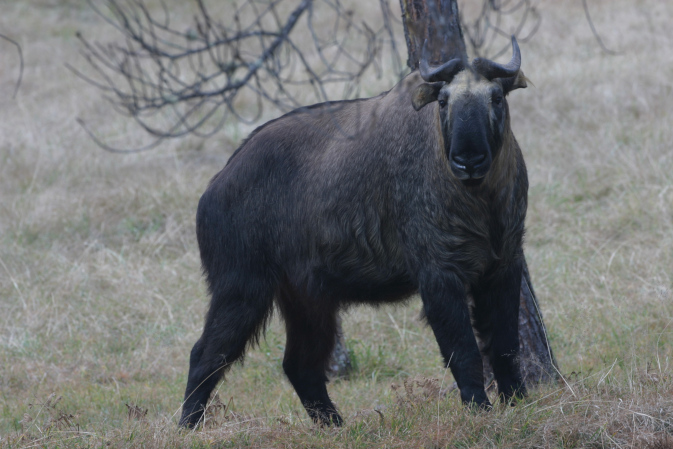
Takin
Budorcas taxicolor
This unique animal looks like a combination of a cow and a goat. According to legend, the divine madman Drukpa Kunley created the Takin by joining the head of a goat to the body of a cow.
 National Bird
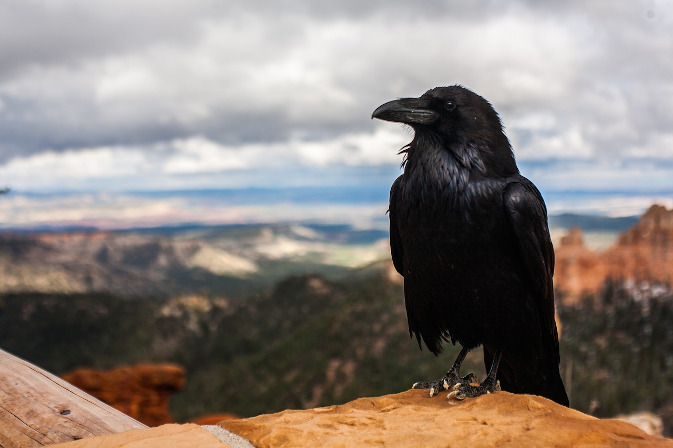
Raven
Corvus corax
The Raven appears on the royal crown and represents the deity Gonpo Jarodonchen (Mahakala with a raven's head), one of Bhutan's most important guardian deities.
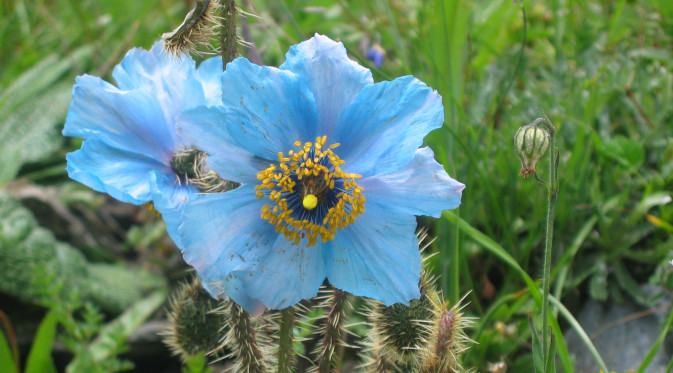 National Flower
Blue Poppy
Meconopsis grandis
This rare and beautiful flower is found in high alpine regions, typically between 3,500 and 4,500 meters elevation. It blooms in late spring and symbolizes Bhutan's unique biodiversity.
Cypress
Cupressus torolusa
The Cypress tree is considered sacred in Bhutan and is often found near temples and monasteries. It symbolizes longevity, spiritual merit, and is deeply associated with religious significance.
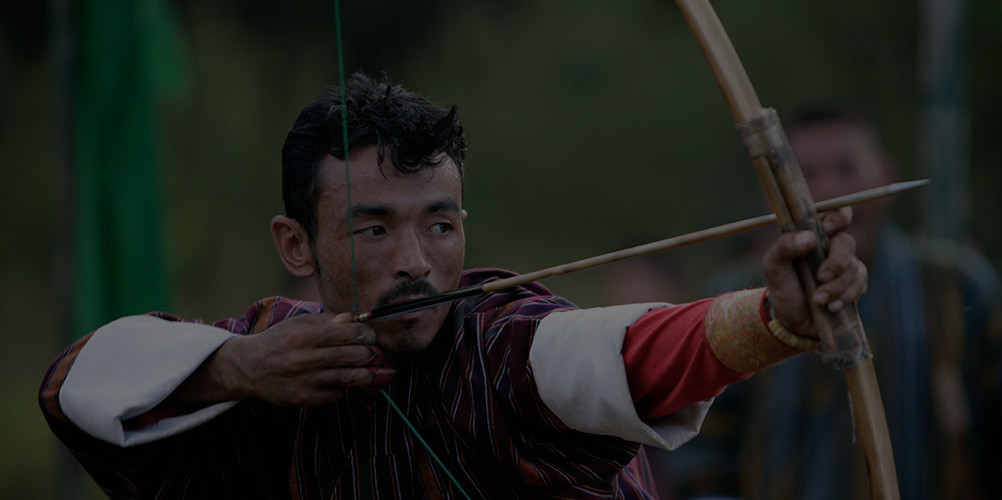 Traditional archery competition in Bhutan
National Sport: Archery (Dha)
Archery is Bhutan's national sport and is deeply embedded in Bhutanese culture. Traditional competitions are held throughout the year, bringing communities together in celebration.
- Traditional songs accompany competitions
- Community celebrations after victories
- Both modern and traditional bows are used
Traditional Attire of Bhutan
The national dress is worn by all Bhutanese and is required in government offices, schools, and official events. This dress code helps preserve Bhutan's unique cultural identity.
Gho
Traditional men's attire
A knee-length robe tied at the waist with a cloth belt called "kera". The pouch formed above the belt traditionally served as a pocket for carrying small items.
- Knee-length robe
- Tied with kera belt
- Forms front pouch
Kira
Traditional women's attire
An ankle-length dress made from a rectangular piece of fabric, wrapped around the body and fastened at the shoulders with silver brooches called "koma".
- Ankle-length dress
- Silver koma brooches
- Worn with wonju jacket
Cultural Significance
These national symbols are not merely ceremonial - they are woven into the daily lives of the Bhutanese people. The preservation of these traditions reflects Bhutan's commitment to maintaining its unique cultural identity while embracing modernization.
Visitors to Bhutan will encounter these symbols throughout their journey - from the national flag flying over dzongs to the Gho and Kira worn by locals, and perhaps even a sighting of the elusive Takin in the mountains.